The silent killer of food quality
Oxygen is essential for life — and for the bacteria, mold, and oxidation reactions that spoil food. Most food quality problems in packaged products trace back to one root cause: oxygen getting into the package. If you're seeing any of the following five signs, your current packaging likely needs a better oxygen barrier.
Sign #1: Shorter shelf life than competitors
Symptom: Your product spoils faster than comparable products in the same category, even with identical ingredients and processing.
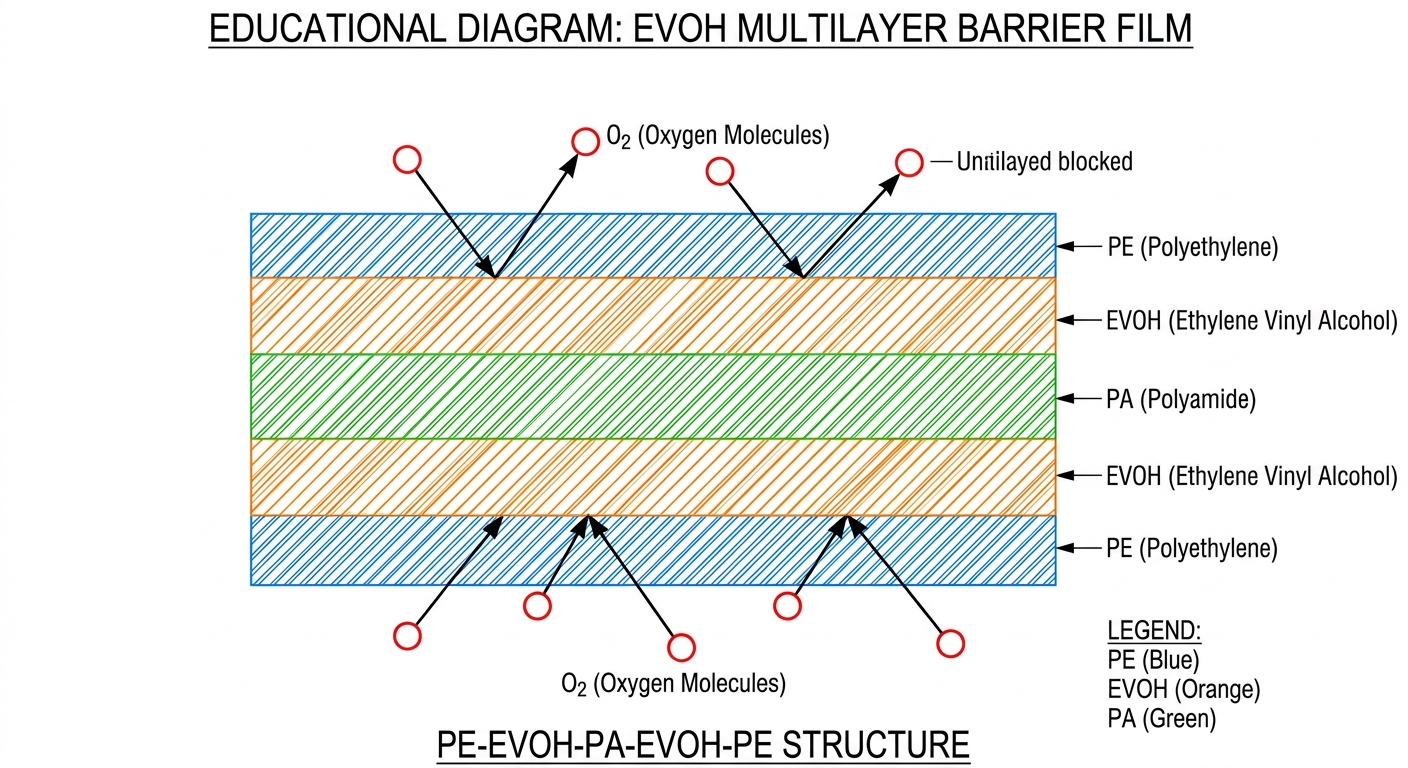
Diagnosis: The current packaging has insufficient oxygen barrier for the product's oxygen sensitivity. OTR (oxygen transmission rate) is too high.
Solution: Move to an EVOH-containing film. A typical 15-μm EVOH layer reduces OTR by 100-1000× compared to standard PE, often extending shelf life by 2-3×.
Reference product: EVOH Resin for high-barrier applications.
Sign #2: Color fading or browning
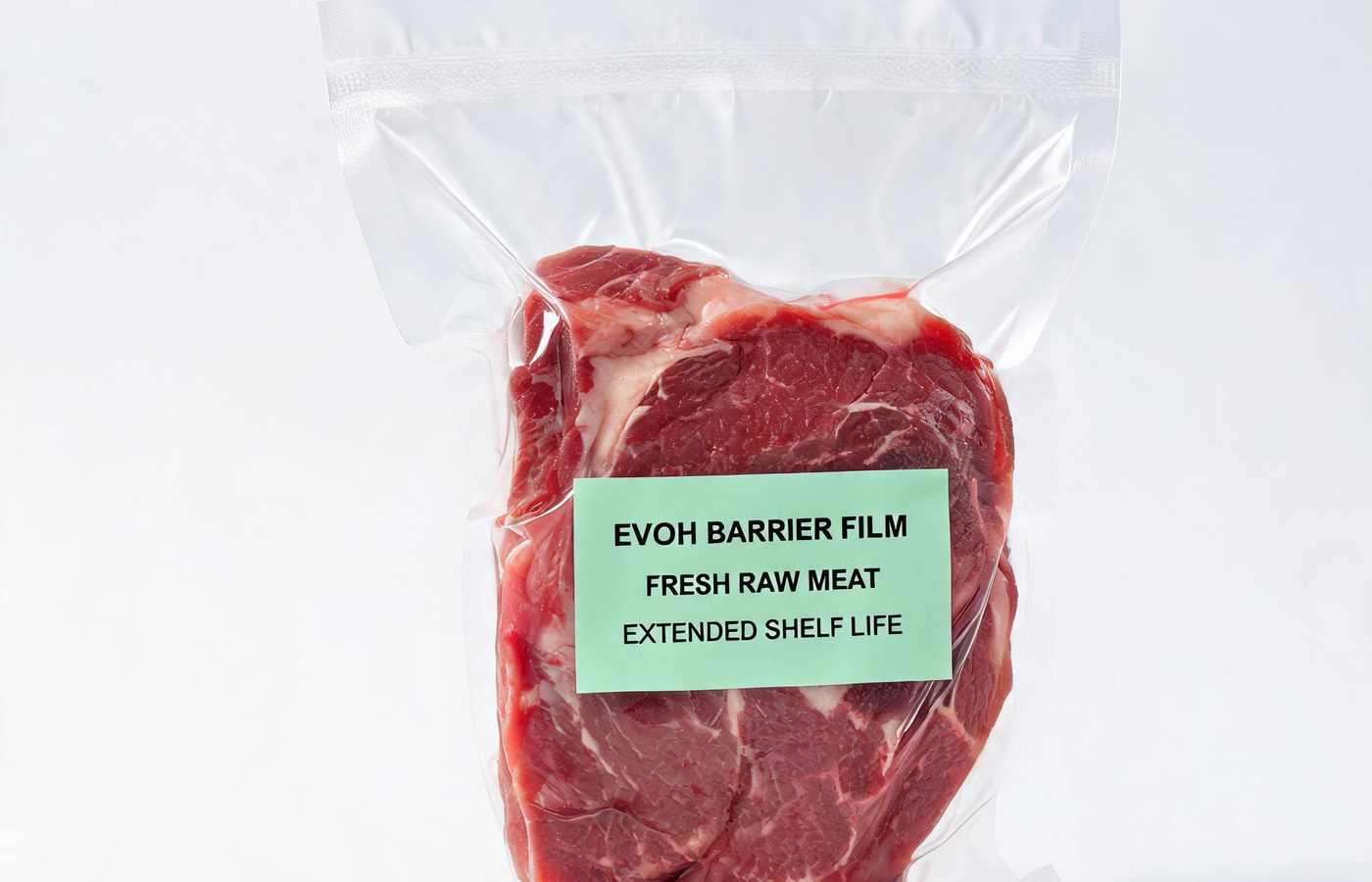
Symptom: Cured meats turn brown, fresh red meat loses its bright color, cheese yellows, dried fruit darkens. All of these are oxidation reactions triggered by oxygen ingress.
Diagnosis: Oxygen is reaching the product faster than the antioxidant additives can neutralize it. Common in standard PE or PP films used for MAP packaging.
Solution: Replace the lidding film or vacuum bag with an EVOH-based structure. Combined with proper MAP gas mix (typically 70% O₂ / 30% CO₂ for red meat, 0% O₂ / 30% CO₂ / 70% N₂ for white fish), color retention improves dramatically.
Sign #3: Off-flavors or stale taste
Symptom: Customer complaints about "stale," "rancid," or "flat" taste — even before the printed expiration date. Particularly common in coffee, nuts, spices, and snack foods.
Diagnosis: Lipid oxidation and aroma loss. Oxygen and aroma molecules pass through standard films, but EVOH blocks both. (Yes — EVOH is an excellent aroma barrier as well as oxygen barrier.)
Solution: Switch to a multilayer film with EVOH. Coffee, for example, retains fresh aroma for 12+ months in EVOH barrier vs 1-2 months in standard PE.
Sign #4: Vacuum loss in vacuum-packed products
Symptom: Vacuum-sealed packages appear "loose" or puffy on the shelf, even shortly after production. In severe cases, you see liquid pooled at the bottom of the pack.
Diagnosis: Two possible causes — (1) the vacuum bag itself is leaking oxygen (insufficient barrier), or (2) microbial activity inside the package is producing gas (CO₂). The first is a packaging problem; the second is a combination problem (product + packaging).
Solution: Use an EVOH vacuum bag. For high-oxygen-sensitivity products, a PA / EVOH / PE structure (typically 70-90 μm) is the industry standard.
Reference product: Vacuum Packaging Film.
Sign #5: Regulatory or retailer compliance failures
Symptom: Major retailers (supermarkets, e-commerce platforms) require barrier performance certifications that your current packaging can't meet. Or new food safety regulations require validated shelf-life testing that your film fails.
Diagnosis: Modern retail and regulatory requirements often specify OTR limits (e.g., < 10 cm³/m²·day for oxygen-sensitive products). Standard PE films at 80-100 μm don't meet these requirements.
Solution: Move to an EVOH-based film and request the OTR certificate from your supplier. At FreshFlex, every shipment comes with full OTR/MVTR/COF data — ask for the certificate with your trial order.
How to upgrade your packaging
If you identified with two or more of the above signs, the next step is a packaging audit:
- Request current OTR data from your film supplier (in cm³/m²·day at 23°C, 0% RH and at 75% RH)
- Compare to your product's actual oxygen sensitivity — most meat, dairy, and processed foods need < 10 cm³/m²·day
- Request EVOH samples for trial runs
- Run shelf-life validation with your QA team
- Scale up once validated
FreshFlex offers free packaging reviews for B2B buyers. Contact our team to schedule a call.