What is retort packaging?
Retort refers to the high-temperature steam sterilization process used to make shelf-stable ready-to-eat meals, soups, sauces, and pet food. The filled and sealed package goes into a pressurized autoclave, typically at 121°C for 30-90 minutes. After sterilization, the package is shelf-stable at ambient temperature for 12-24 months — no refrigeration needed.
For military rations, outdoor adventure meals, and shelf-stable Asian cuisines (curry, congee, rice dishes), retort packaging is the dominant format. The global retort packaging market is growing at 6-7% annually, driven by urbanization and demand for convenient meals.
The challenge: 121°C is brutal
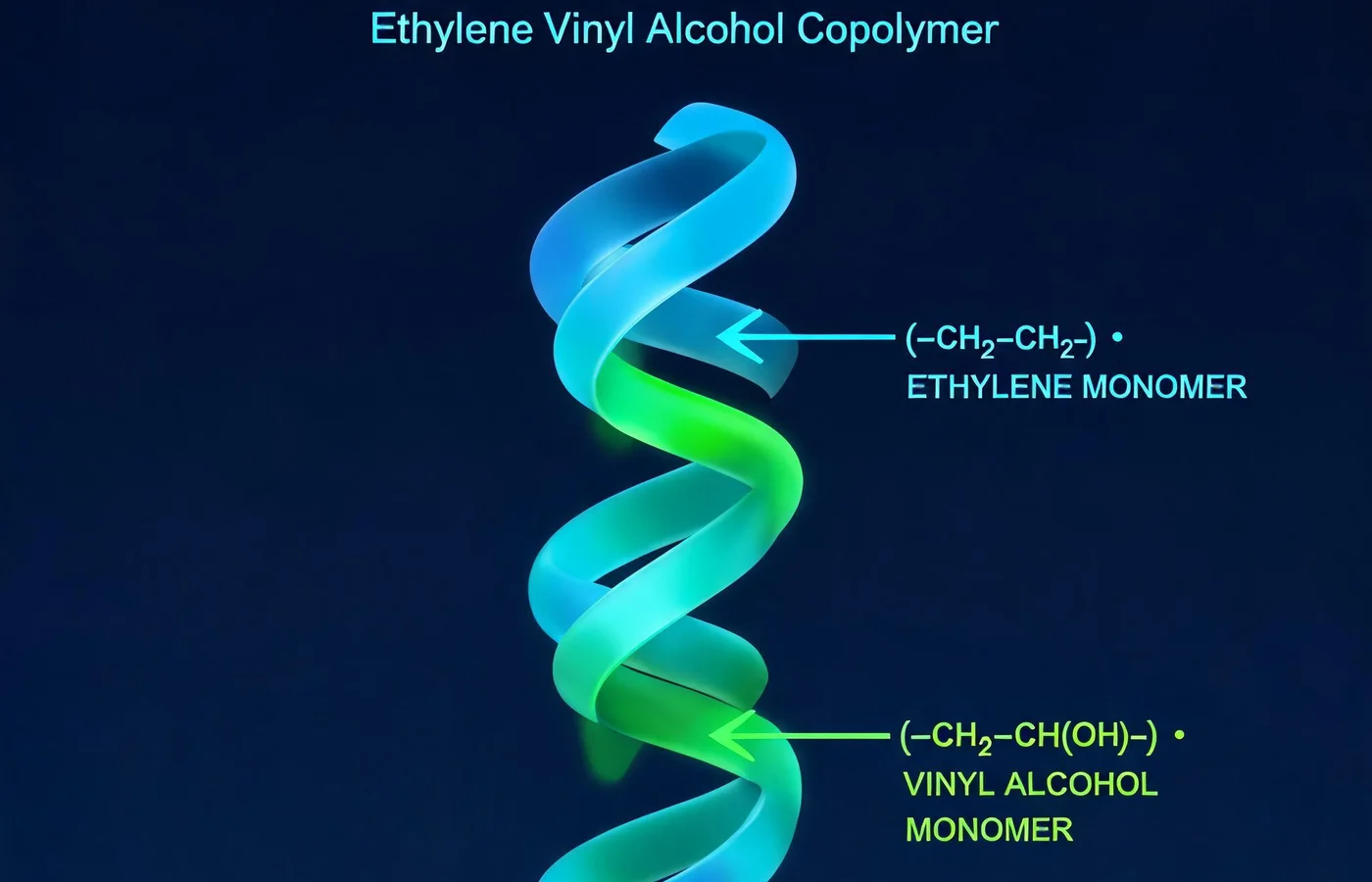
Most plastics soften, distort, or delaminate at retort temperatures. EVOH, in particular, faces a tough problem: at 121°C, it absorbs moisture and loses oxygen barrier — exactly when you need it most. The solution is careful multilayer design.
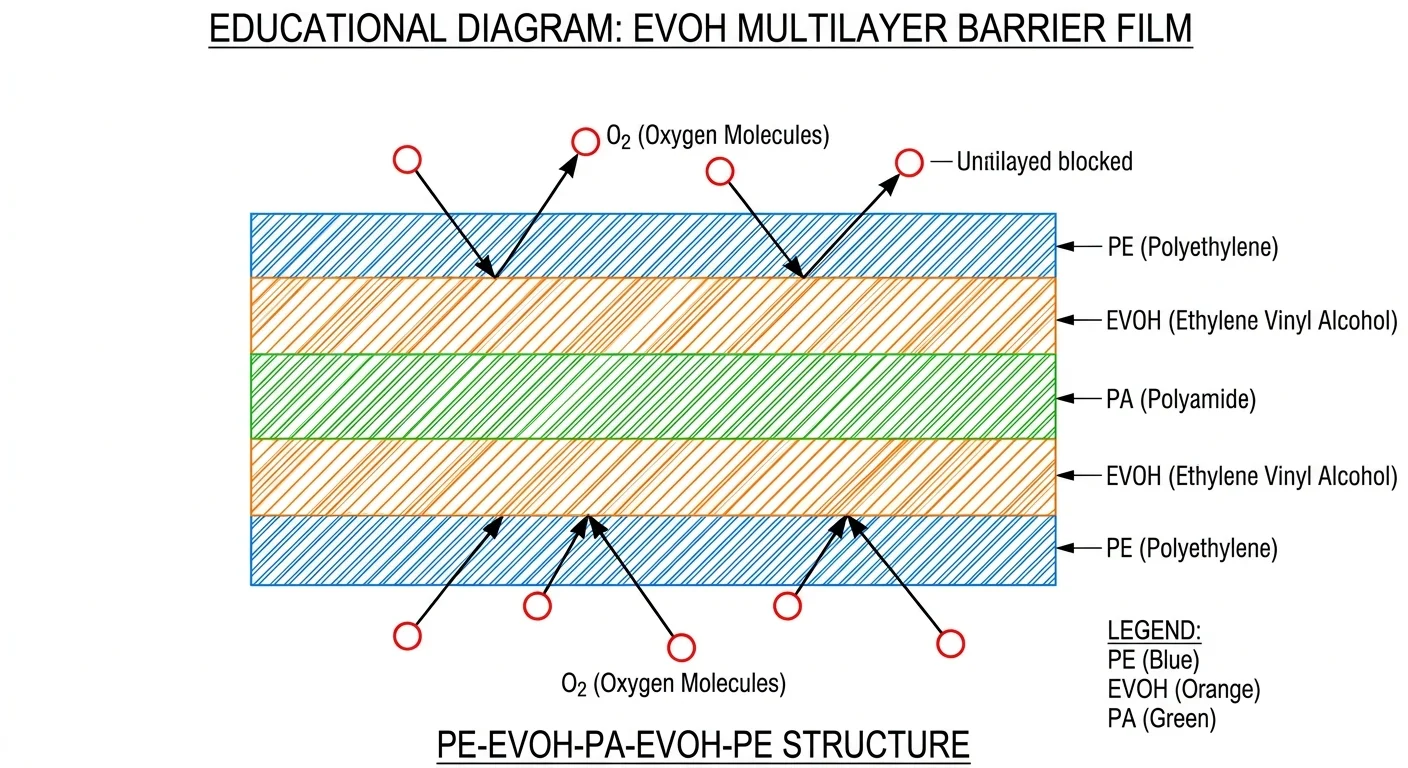
The retort film structure: PA / tie / EVOH / tie / PP
A typical retort-grade film uses this structure:
- PP outer layer — provides the high-temperature strength and gloss
- PA (nylon) layer — protects EVOH from moisture absorption during the retort cycle
- Tie layers — bond the dissimilar polymers together
- EVOH — the oxygen barrier that survives the retort cycle
- PP inner layer — food contact, heat-sealable
The PA layer is critical. It acts as a moisture shield, keeping the EVOH dry during sterilization so the barrier properties are restored as the package cools. Without the PA layer, EVOH would absorb water during the retort cycle and deliver poor post-sterilization barrier performance.
How barrier performance holds up after retort
A well-designed retort film shows:
- OTR before retort: < 1 cm³/m²·day
- OTR after retort: < 5 cm³/m²·day (slight increase is normal)
- Shelf life at 25°C: 18-24 months for oxygen-sensitive contents
- Seal integrity: no delamination, no channel leaks
Common applications
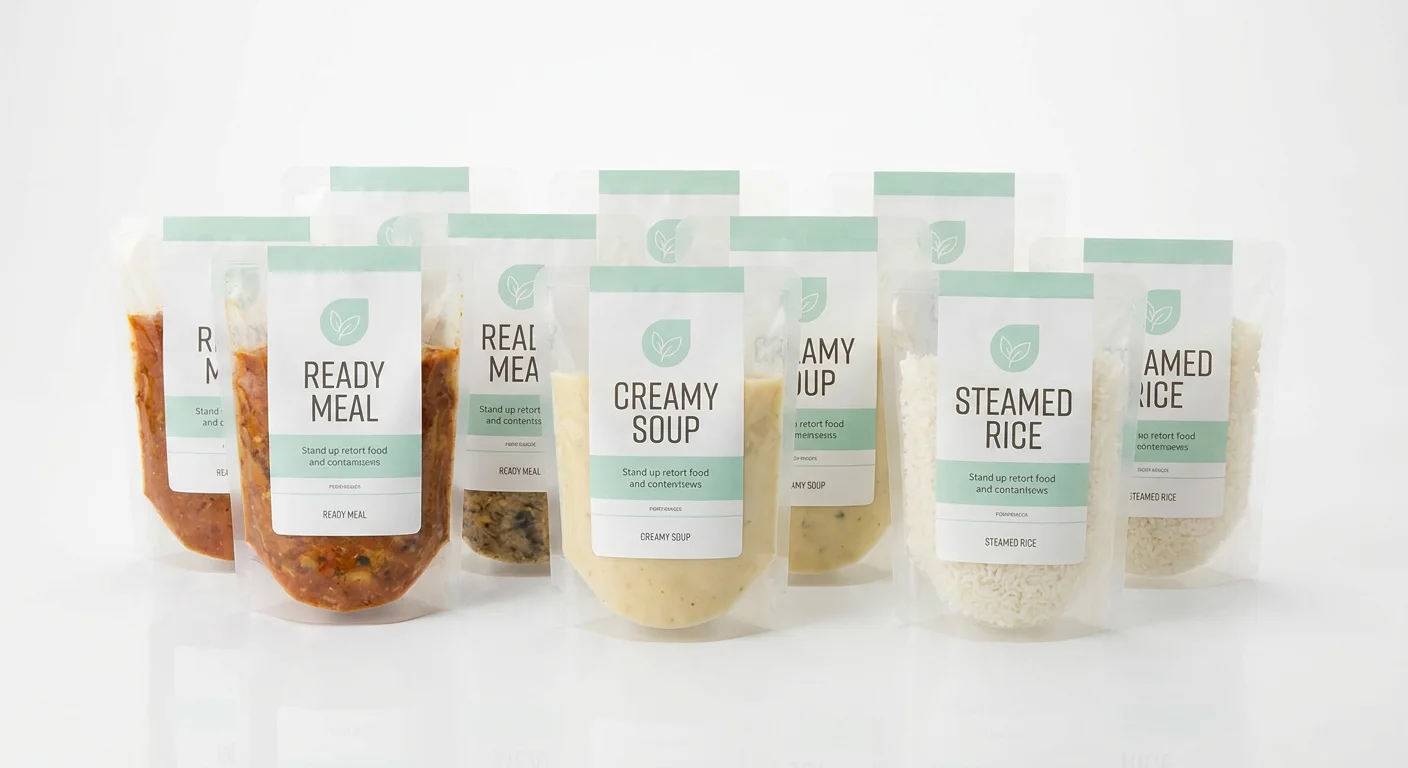
- Ready meals — curry, rice dishes, pasta, congee (the dominant Asian retort category)
- Soups and broths — both liquid and dehydrated
- Sauces — pasta sauce, soy-based sauces, cooking bases
- Pet food — premium wet food in pouches
- Military / outdoor rations — MRE-style meals
- Baby food — puree in pouches
Pitfalls to avoid
Three common mistakes when specifying retort films:
- Skipping the PA layer — saves cost but ruins post-retort barrier performance
- Using the wrong EVOH grade — low-ethylene (27-29%) EVOH gives best barrier but needs more protection
- Insufficient seal strength — retort cycles stress seals; specify ≥ 35 N/15mm seal strength
FreshFlex retort films
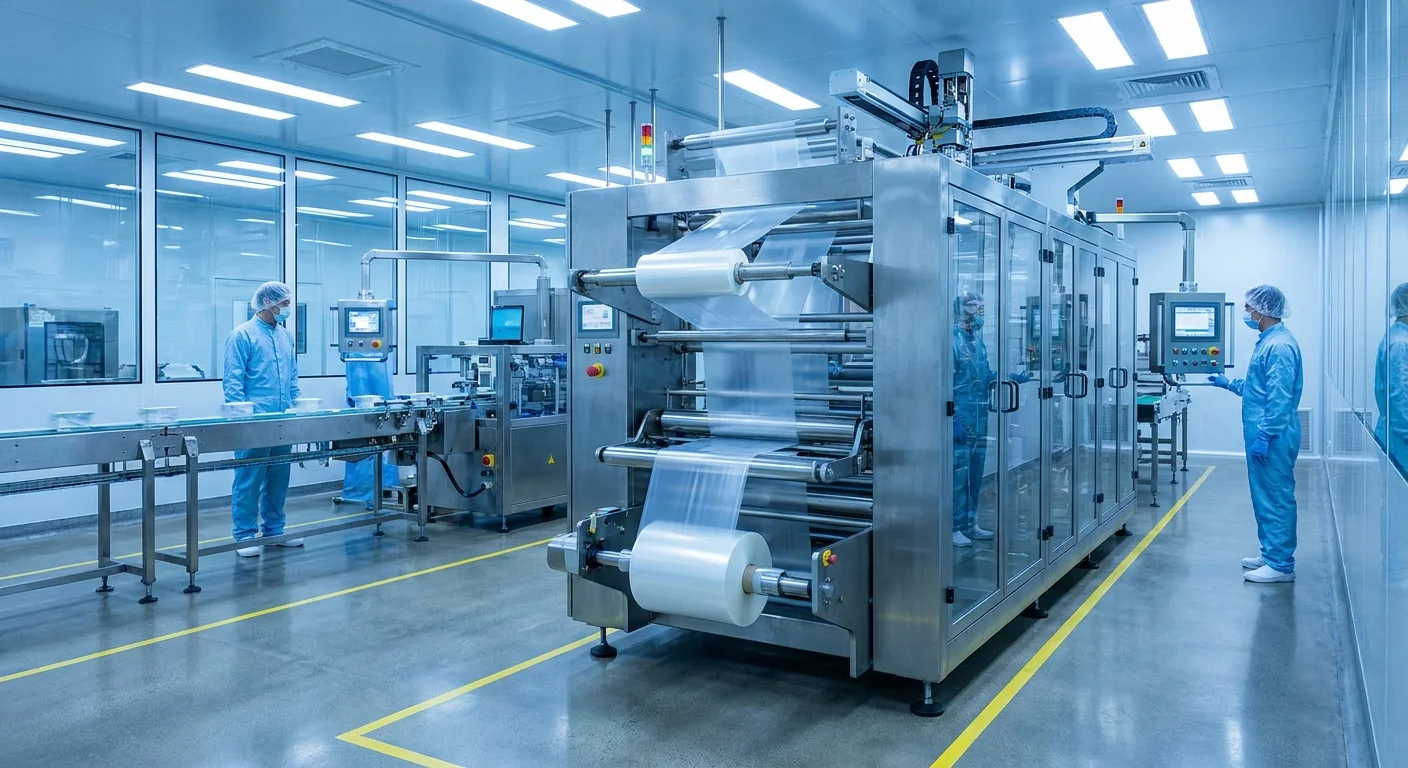
We supply retort-grade cast co-extrusion films to ready-meal manufacturers across Southeast Asia, with optimized PA/EVOH/PP structures tested for local retort cycles (typically 121°C / 45 min for Asian retort specifications). Contact us for samples and technical data sheets.