The hidden sustainability metric
When brands talk about "sustainable packaging," the conversation usually focuses on the package itself: Is it recyclable? Is it compostable? Is it bio-based? But the bigger environmental impact of food packaging is often what it prevents — specifically, food waste.
Globally, roughly one-third of all food produced is wasted (UN FAO data). In Southeast Asia, post-harvest and retail food waste can reach 20-40% for fresh produce, meat, and seafood. Packaging that extends shelf life — even by a few days — can have a far larger carbon footprint reduction than switching from plastic to paper.
How EVOH reduces food waste
EVOH-containing barrier films extend shelf life by slowing oxygen-driven spoilage:
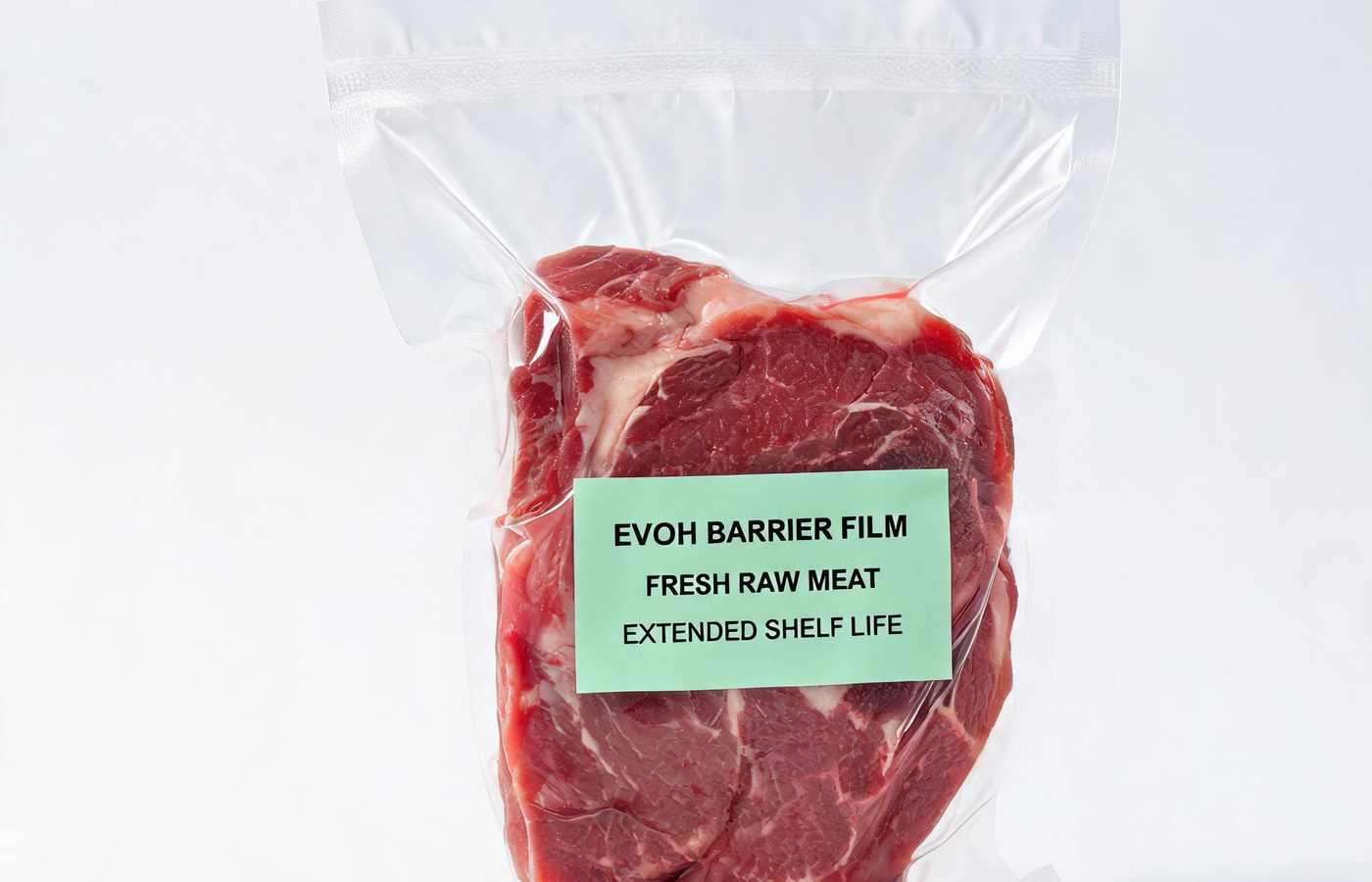
- Fresh meat — 3-5 days (standard PE) → 14-21 days (EVOH vacuum pack)
- Cheese — 2-3 weeks (basic film) → 2-3 months (EVOH barrier)
- Ready meals — days (chilled) → 12-24 months (retort with EVOH)
- Coffee — 1-2 months (loses aroma) → 12+ months (EVOH retains aroma)
For a typical meat processor, doubling shelf life means less waste, fewer returns, and the ability to ship further — opening export markets that would otherwise be impossible.
EVOH and the recyclability question
Historically, multilayer films with EVOH were difficult to recycle because of the mixed polymer layers. But the industry has adapted:
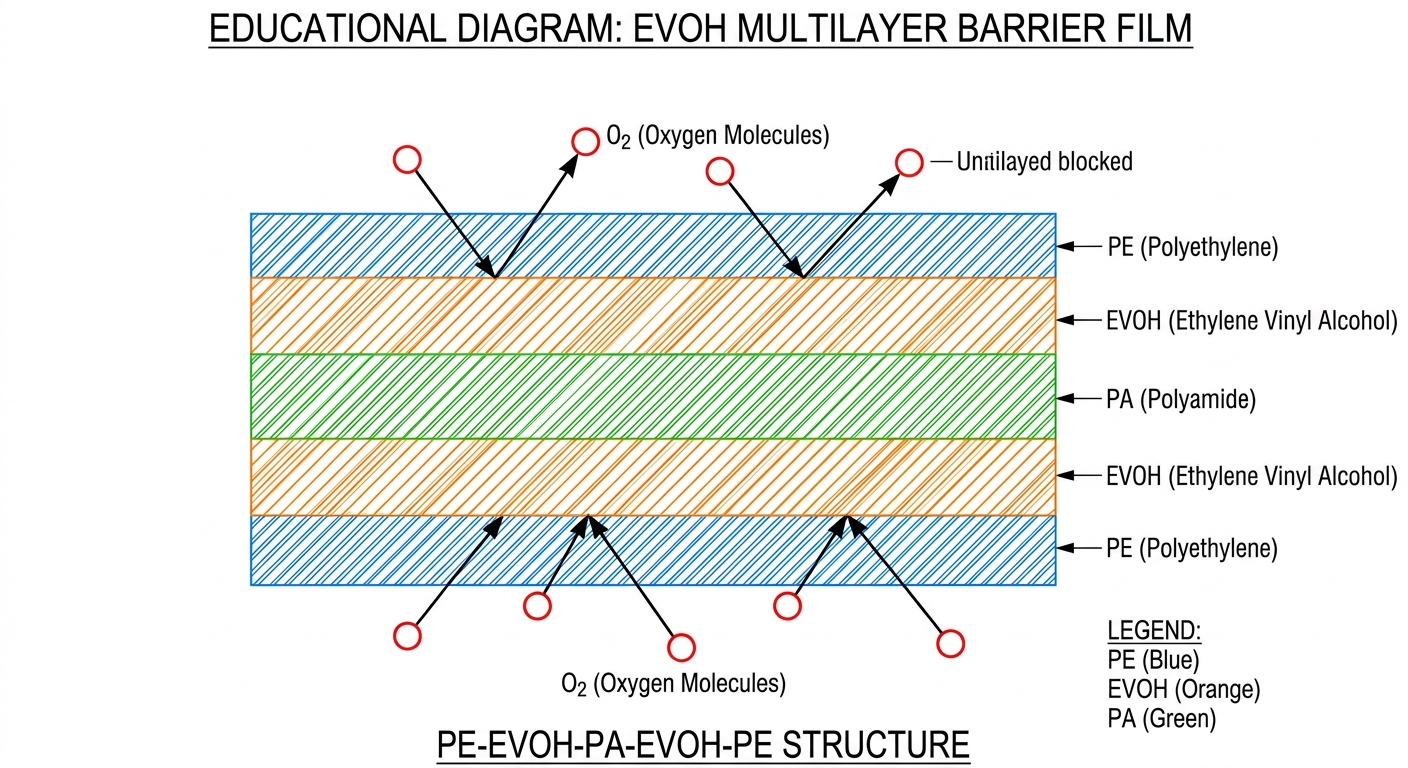
- Mono-material PE / EVOH / PE structures (designed for PE recycling streams) are now widely available
- MDO-PE (machine-direction oriented PE) gives stiffness without needing PA or PET — fully recyclable with EVOH barrier
- Chemical recycling processes can break down mixed multilayer films into feedstock for new plastics
- EVOH itself is non-toxic and produces clean incineration (only CO₂ and H₂O)
EVOH vs metallized films — the sustainability trade-off
Metallized films (e.g., MET-PET, MET-PP) have long been used for barrier, but they present recycling challenges — the metal layer contaminates recycling streams and makes the film opaque (preventing NIR sorting). EVOH delivers similar O₂ barrier performance with full transparency and PE-stream recyclability.
For brands with public sustainability commitments or EPR (Extended Producer Responsibility) obligations, switching from metallized to EVOH-based structures is increasingly the preferred path.
Regulatory tailwinds
Several regulations are accelerating the shift to recyclable, high-barrier packaging:
- EU PPWR (Packaging and Packaging Waste Regulation) — mandates 100% recyclable packaging by 2030
- China's EPR scheme — extended producer responsibility for packaging waste
- Single-use plastics directives in many Southeast Asian countries
- Brand commitments — most major FMCG brands have public 2025/2030 recyclable packaging targets
EVOH is well-positioned for this transition: it delivers the barrier performance brands need and the recyclability regulators are demanding.
How FreshFlex supports sustainable packaging
We help our customers design mono-material and recyclable multilayer structures that meet both performance and sustainability goals. Whether you're transitioning from MET-PET, designing a new EVOH/PE mono-material structure, or evaluating your carbon footprint, our technical team can help. Get in touch for a packaging review.