What does EVOH stand for?
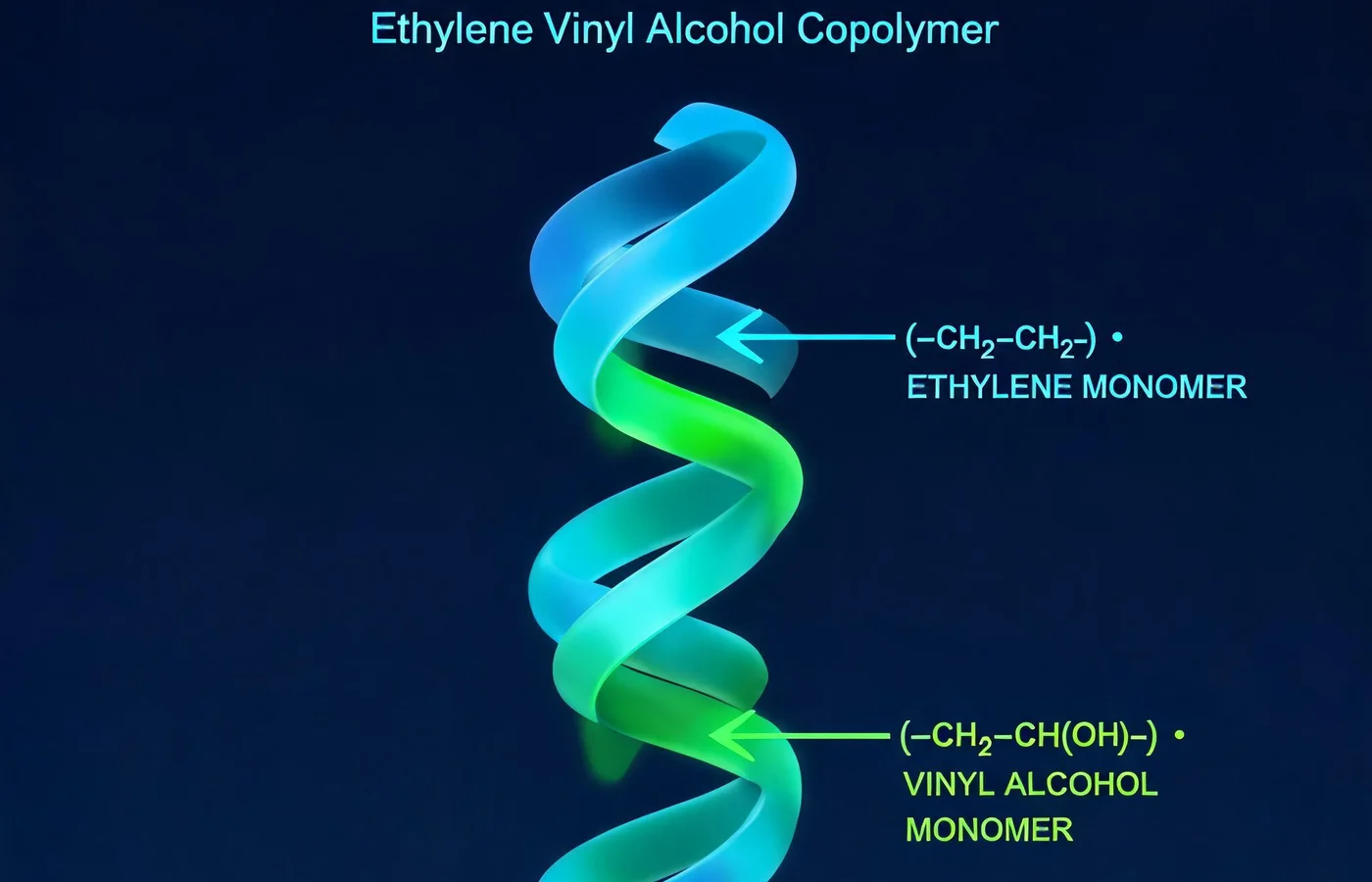
EVOH is the common abbreviation for Ethylene-Vinyl Alcohol Copolymer, a semi-crystalline thermoplastic with an unusual combination of properties: extremely high oxygen barrier, excellent aroma retention, and good processability. It is manufactured from ethylene and vinyl acetate monomers through a controlled hydrolysis process, and is commercially available in pellet form for extrusion coating, co-extrusion, and lamination.
The key to EVOH's performance lies in its molecular structure. Strong hydrogen bonds between vinyl alcohol chains create a dense crystalline lattice that physically blocks oxygen molecules from passing through. In practical numbers, a typical 15-micron EVOH layer provides an oxygen transmission rate (OTR) of less than 1 cm³/m²·day·atm at 23°C and 0% RH — roughly 10,000 times better than low-density polyethylene (LDPE) at the same thickness.
Why packaging engineers choose EVOH
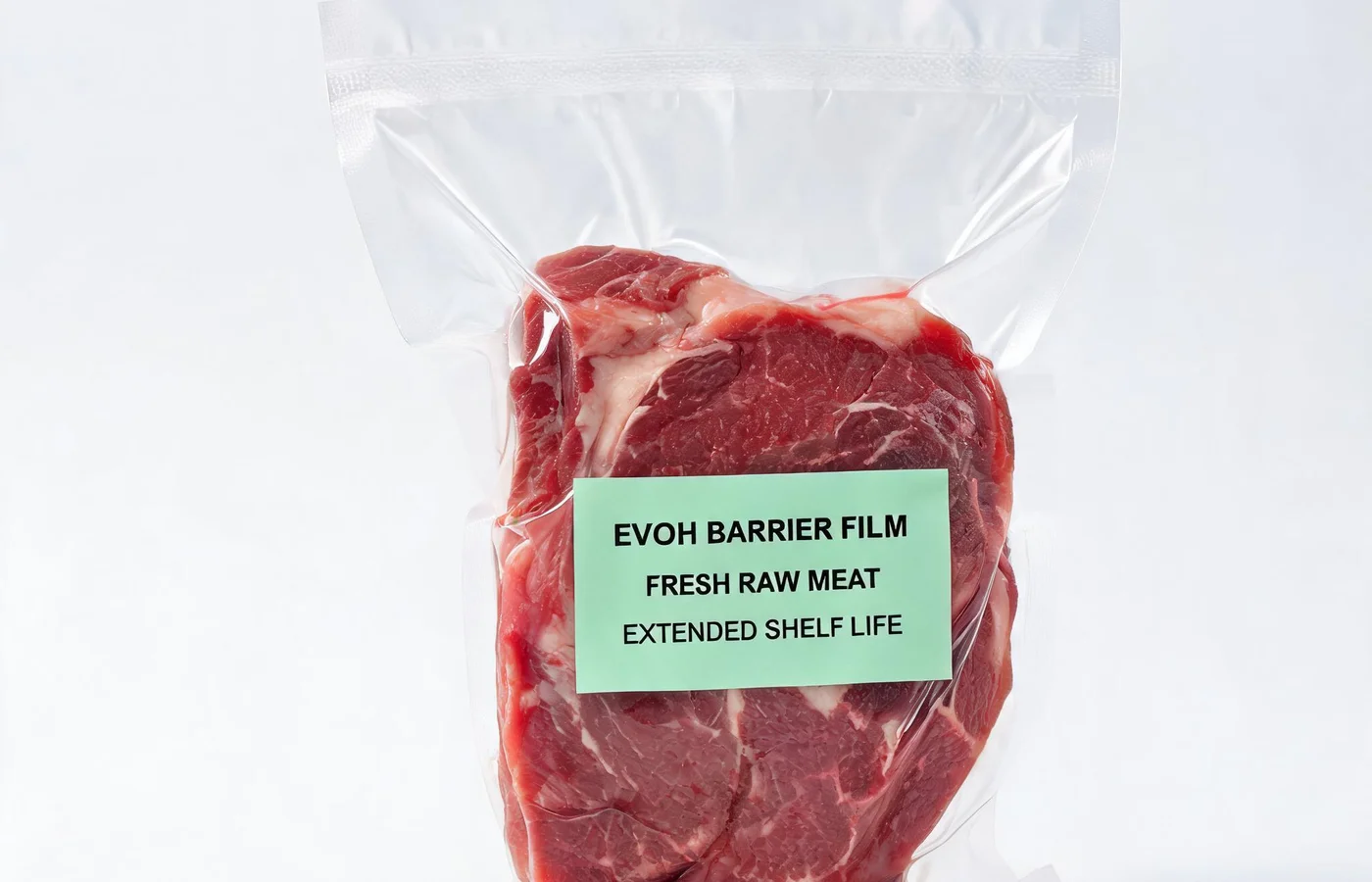
For oxygen-sensitive products — fresh meat, processed cheese, ready meals, coffee, vitamins, electronic components, even automotive fuel systems — oxygen ingress is the #1 cause of quality loss. EVOH provides the barrier layer that lets the rest of the package structure do other jobs: the outer layer provides strength and printability, the inner layer provides heat sealability, and EVOH does what it does best — stop oxygen.
- Up to 10,000× better oxygen barrier than LDPE
- Transparent (no yellowing) — ideal for clear packaging
- Lightweight — thinner films do the same job
- Compatible with PE, PP, PA, PET, and PS in multilayer structures
- Food-contact approved by FDA, EFSA, and China GB standards
Where EVOH fits in a multilayer film
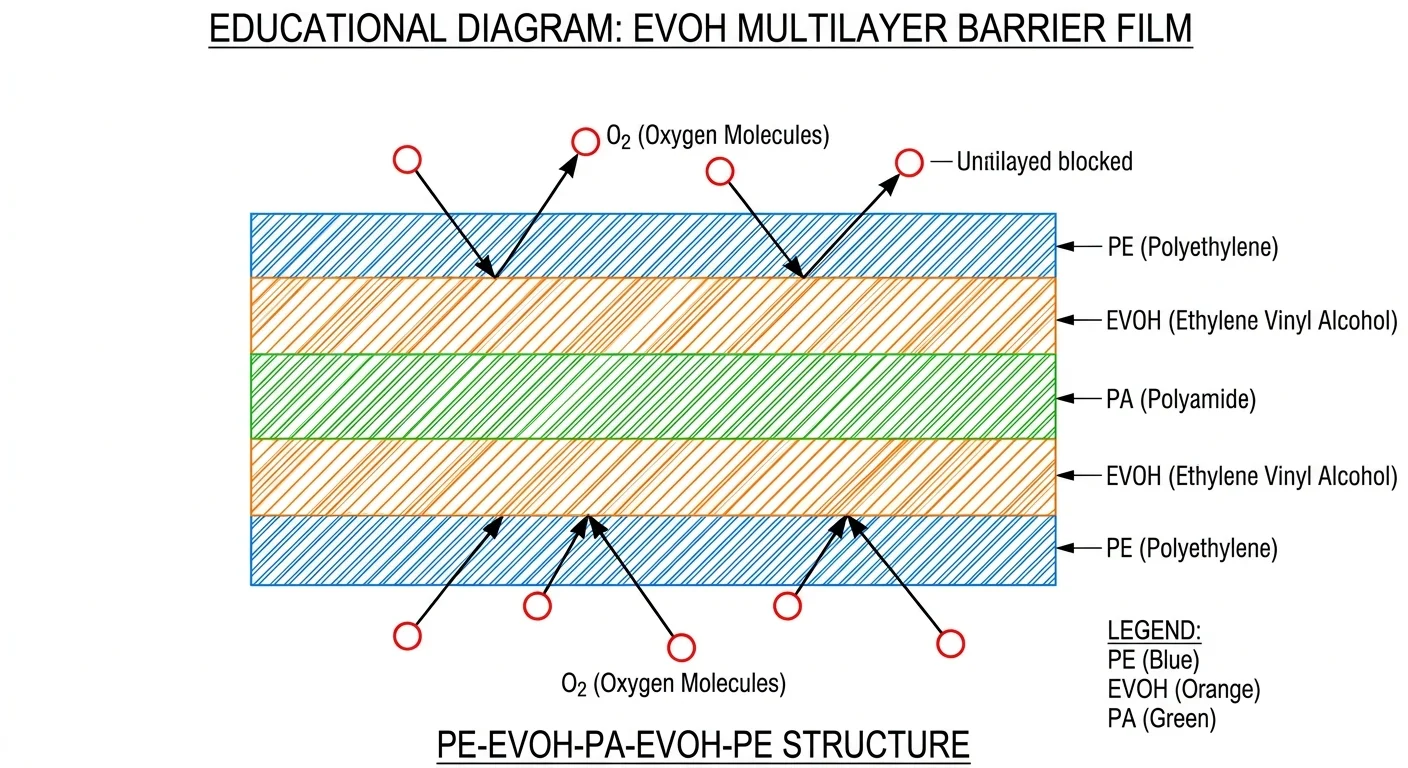
EVOH is rarely used alone. It is almost always a thin middle layer in a 5-, 7-, 9-, or 11-layer co-extruded film, sandwiched between structural layers (typically PA, PET, or PE). Two thin tie layers (specialized adhesives) bond EVOH to the surrounding polyolefins. The result is a film that combines the best of every material: toughness, printability, sealability, and a near-impenetrable oxygen barrier.
EVOH's one trade-off — and how to manage it
EVOH has one weakness: it loses barrier performance in high humidity. Above 70% RH, oxygen transmission increases significantly. In practice, this is solved by placing EVOH in the middle of the multilayer structure, where it is protected from direct moisture exposure by the outer and inner polyolefin layers. For retort or hot-fill applications, an additional nylon (PA) outer layer provides even better humidity protection.
For Southeast Asian markets — where ambient humidity routinely exceeds 80% RH — selecting the right multilayer structure is critical. At FreshFlex, we typically recommend PA / tie / EVOH / tie / PE constructions for high-moisture environments, and have supplied these structures to meat, dairy, and seafood processors across Thailand, Vietnam, Indonesia, and the Philippines.
Common applications
- Fresh & processed meat — vacuum and MAP packaging, 14-21 day shelf life
- Dairy — cheese, yogurt cups, butter wraps
- Ready meals & retort food — 12-24 month ambient shelf life
- Seafood — frozen and chilled
- Coffee, tea, spices — aroma and flavor retention
- Electronics — moisture-sensitive components
- Cosmetics & pharma — oxygen-sensitive formulations
Choosing the right EVOH grade
EVOH resins are typically classified by ethylene content (27%, 29%, 32%, 38%, 44%). Higher ethylene content = better processability and humidity resistance, but slightly lower oxygen barrier. For most food packaging applications, 32% or 38% ethylene grades offer the best balance. For retort or high-humidity applications, 27% or 29% grades provide maximum barrier when properly protected by outer layers.
For more details on our EVOH grades, see our EVOH Resin product page.